Valladolid, Spain
- 299,265 people
- 16 places to visit
- 41.6523, -4.7245
Places to Visit (16)
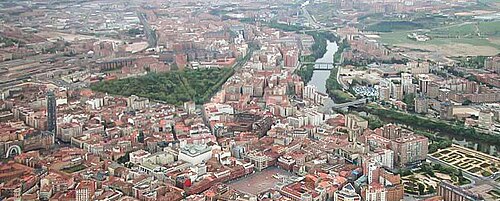
Valladolid is a historic city located in the northwest of Spain, serving as the capital of the province of the same name and part of the autonomous community of Castile and León. Founded in the early Middle Ages, Valladolid rapidly grew into a significant political and cultural center. In the late 15th century, it became the seat of the Spanish court under King Ferdinand and Queen Isabella, which marked a period of prosperity. The city was also linked to the era of exploration, being the birthplace of Christopher Columbus and the destination for many significant historical events, including the signing of the Treaty of Tordesillas in 1494, which divided the New World between Spain and Portugal.
Architecturally, Valladolid boasts a blend of Gothic, Renaissance, and Baroque styles, with prominent landmarks such as the Cathedral of Our Lady of the Assumption, which combines elements of these styles, and the stunning Plaza Mayor, considered one of the most beautiful squares in Spain. The city is also home to several universities, making it a vibrant center for education and culture. Valladolid hosts numerous festivals, including the famous Holy Week processions, which have been declared of National Tourist Interest. The city’s culinary scene is noteworthy as well, featuring traditional dishes like lechazo asado (roast lamb) and various regional wines, particularly those from the Ribera del Duero region.
Valladolid is well-connected by transport, including high-speed rail and extensive road networks, facilitating easy access to other major cities in Spain, such as Madrid and Salamanca. The city is also noted for its green spaces, with several parks offering a tranquil escape from the urban environment. With a population of around 300,000 residents, Valladolid balances a rich historical legacy with modern urban life, making it an intriguing destination for visitors and a dynamic place to live for its inhabitants. Its cultural offerings, historical significance, and vibrant community reflect the diverse identity of this charming Spanish city.
Facts about Valladolid
- Valladolid is known as the birthplace of Christopher Columbus, who is believed to have died in the city in 1506.
- The city was the capital of Spain during the reign of Charles I in the 16th century, making it a significant political center.
- Valladolid boasts the only remaining example of a Royal Palace built in the Renaissance style in Spain, the Palacio Real.
- It is home to the National Sculpture Museum (Museo Nacional de Escultura), which houses one of the most important collections of Spanish sculpture in the world.
- The city hosts the International Film Festival (Seminci), one of the oldest and most prestigious film festivals in Spain, held annually since 1956.
- Valladolid has a rich literary history, being closely associated with great Spanish authors such as José Zorrilla and Miguel Delibes.
- The city's Semana Santa (Holy Week) celebrations are recognized as one of the most important in Spain, with elaborate processions and rich tradition.
- Valladolid was the site of the famous 16th-century debates between theologians, known as the Valladolid Controversy, concerning the treatment of indigenous peoples in the Americas.
- The city is renowned for its distinctive gastronomic offering, including local specialties like 'lechazo asado' (roast lamb) and 'vino de Rueda'.
- The Plaza Mayor of Valladolid is one of the largest in Spain and has served as a central meeting point since its creation in the 16th century.