Venice, Italy
- 51,298 people
- 18 places to visit
- 45.4404, 12.316
Places to Visit (18)
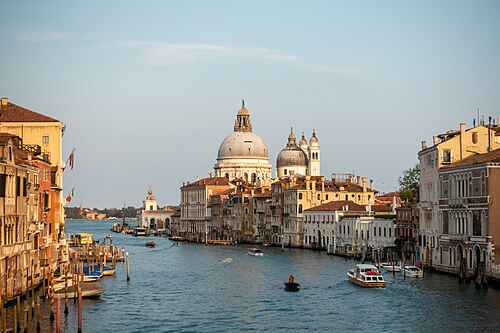
Venice, the capital of the Veneto region in northeastern Italy, is renowned for its unique network of canals, intricate architecture, and rich cultural heritage. Founded in the 5th century AD as a refuge from invasions, Venice evolved into a powerful maritime republic, dominating trade in the Mediterranean during the Middle Ages and the Renaissance. The city is built on over 100 small islands separated by canals and connected by bridges. Its iconic waterways, particularly the Grand Canal, serve as the primary transportation routes, with gondolas and water buses (vaporetto) providing essential services for both locals and tourists.
The city is celebrated for its stunning architectural landmarks, including St. Mark's Basilica, known for its opulent mosaics and distinctive Byzantine style, and the Doge's Palace, which exemplifies Venetian Gothic architecture. The piazza, or public square, known as St. Mark's Square, is a focal point for visitors, brimming with cafes, shops, and social activity. Venice hosts numerous cultural events, including the famous Venice Carnival, characterized by elaborate masks and costumes. The city is also home to prestigious art institutions, such as the Peggy Guggenheim Collection and the Venice Biennale, which highlights contemporary art and architecture from around the world.
With a population of approximately 260,000, Venice faces various challenges, including rising water levels and tourism-related issues, as millions flock to its historic streets each year. The city relies heavily on its appeal as a cultural and historical destination, while also grappling with the need for preservation. Sustainability efforts, such as regulations to limit tourist numbers and initiatives to protect its delicate ecosystem, are increasingly crucial for maintaining Venice's unique legacy. Despite these challenges, Venice remains one of the world's most enchanting cities, attracting visitors with its romantic ambiance, artistic treasures, and timeless beauty.
Facts about Venice
- Venice is built on a network of 118 small islands separated by canals and linked by over 400 bridges, making it the only city in the world without cars.
- The city's famous gondolas, traditionally used for transportation, are now primarily used for tourism and have a unique design that has remained largely unchanged for centuries.
- Venice is home to St. Mark's Basilica, an architectural masterpiece that combines Byzantine, Romanesque, and Gothic styles, adorned with golden mosaics and intricate details.
- The Venice Carnival is one of the most famous in the world, known for its elaborate masks and costumes, with roots dating back to the 13th century.
- Venice is threatened by the phenomenon of 'Acqua Alta' (high water), where rising sea levels cause periodic flooding in the city, particularly during winter months.
- The Grand Canal, which runs through the heart of Venice, is the city's main waterway and is lined with historic buildings, making it a prime spot for viewing Venetian architecture.
- The city has a unique system of government established by the Doge, who was the elected leader of Venice from the 8th century until 1797, when the Republic of Venice fell to Napoleon.
- Venice's iconic Rialto Bridge is one of the oldest bridges across the Grand Canal and serves as a central commercial area, historically being the financial heart of the city.
- The Venetian Lagoon, surrounding the city, is a UNESCO World Heritage site, known for its rich biodiversity and historical significance as a trading port.
- Venice is famous for its glassmaking, particularly from the island of Murano, where artisans have created exquisite glass products for over a thousand years.