Vientiane, Laos
- 196,731 people
- 17 places to visit
- 17.9757, 102.6331
Places to Visit (17)
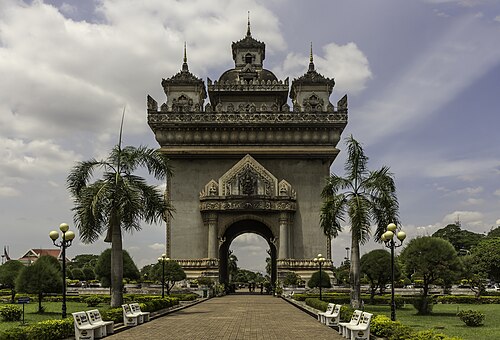
Vientiane, the capital city of Laos, is situated on the banks of the Mekong River, adjacent to the border with Thailand. As the largest city in the country, it serves as the administrative, political, and economic center of Laos. With a population of around 800,000 residents, Vientiane presents a unique blend of traditional Lao culture and colonial French influence, which is evident in its architecture, cuisine, and lifestyle. The city's historical significance is marked by landmarks such as Pha That Luang, a golden stupa that is regarded as a national symbol of Laos, and the Patuxai, an arch resembling the Arc de Triomphe in Paris, that commemorates those who fought for independence from France.
Vientiane is characterized by its relatively laid-back atmosphere compared to other Southeast Asian capitals, offering a more relaxed pace of life. The city is known for its vibrant street markets, such as the Morning Market (Talat Sao), and its night market along the Mekong River, where locals and tourists alike can sample various Lao dishes, handicrafts, and textiles. Additionally, the city serves as a gateway for exploring the rich cultural and natural beauty of Laos, including Buddhist temples, lush green landscapes, and diverse ethnic communities in the surrounding regions. The economy of Vientiane is steadily growing, driven by tourism, trade, and investment, particularly in infrastructure and development projects. As the country continues to modernize while preserving its unique heritage, Vientiane remains a reflection of Laos' history and its aspirations for the future.
Facts about Vientiane
- Vientiane is the capital and largest city of Laos, serving as the political and administrative center of the country.
- The city is home to the Patuxai, a monumental arch that resembles the Arc de Triomphe in Paris, symbolizing Laos' struggle for independence.
- Vientiane is known for its unique blend of French colonial architecture and traditional Lao culture, showcasing a diverse historical heritage.
- The That Luang Stupa in Vientiane is considered the most important national monument and a symbol of Buddhism in Laos.
- Vientiane has a more laid-back atmosphere compared to other Southeast Asian capitals, often giving it the nickname 'the sleepy capital'.
- The city hosts the annual Boat Racing Festival on the Mekong River, celebrating Lao culture and community spirit.
- Vientiane's COPE Visitor Centre raises awareness about unexploded ordnance (UXO) issues in Laos, highlighting the city's role in addressing post-war challenges.
- Passports issued by Vientiane can facilitate easier travel to several countries in the ASEAN region, making it a key hub for regional connectivity.
- Vientiane is located along the Mekong River, offering residents and visitors scenic riverfront views and opportunities for river-related activities.
- The city is a melting pot of cultures, with a significant influence from Thai culture due to its proximity to Thailand, especially evident in cuisine and festivals.