Vigevano, Italy
- 57,970 people
- 14 places to visit
- 45.3219, 8.8467
Places to Visit (14)
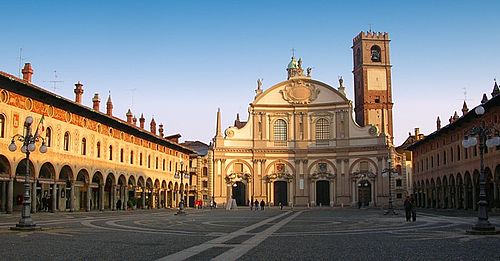
Vigevano is a picturesque city located in the Lombardy region of northern Italy, approximately 35 kilometers southwest of Milan. The city lies at the confluence of the Ticino and Lomellina rivers, which historically contributed to its development as a center of trade and agriculture. With a rich history that dates back to ancient times, Vigevano was a key settlement during the Roman Empire and later became prominent in the Middle Ages when it was part of the Kingdom of Italy. The city is renowned for its well-preserved historical architecture, which features a blend of Gothic, Renaissance, and Baroque styles.
One of Vigevano’s most notable landmarks is the Sforza Castle, originally built in the 15th century under Duke Ludovico il Moro, who transformed it into a lavish residence. The castle is surrounded by expansive gardens and a moat, offering a glimpse into the opulence of the Renaissance period. The central square, Piazza Ducale, is another highlight, characterized by its elegant porticoes and arcades, and is considered one of the finest squares in Italy. Dominating the square is the stunning Cathedral of St. Ambrogio, a Gothic structure that houses impressive artworks and historical relics. The city's historical significance is further underscored by its traditional craftsmanship in shoemaking, which has been an essential industry since the 19th century. Vigevano is often recognized as a center of high-quality footwear, attracting both artisans and tourists alike.
In addition to its historical and architectural treasures, Vigevano serves as a cultural hub, hosting various events and festivals throughout the year that showcase its rich heritage. The local gastronomy reflects the agricultural bounty of the region, with specialties that include risotto, polenta, and local wines. The city's strategic position near major transportation routes makes it an accessible destination for visitors looking to explore the charm of northern Italy. Today, Vigevano continues to thrive, balancing its historical legacy with modern developments, making it a unique and appealing spot for both locals and tourists.
Facts about Vigevano
- Vigevano is famous for its stunning Renaissance Piazza Ducale, which is considered one of the most beautiful squares in Italy.
- The city is renowned for its historical shoe production, being a significant center for the footwear industry since the 19th century.
- Vigevano is home to the Castello Sforzesco, a castle built in the 15th century that reflects the military and architectural significance of the city during the Sforza dynasty.
- The city hosts the International Footwear Museum, showcasing the history and evolution of shoe design and manufacturing.
- Vigevano has a unique blend of architectural styles, including Gothic, Renaissance, and Baroque, visible in its churches and palaces.
- The city is known for the 'Palio di Vigevano', a historic festival featuring a traditional archery competition that dates back to the 15th century.
- Vigevano's Cathedral, dedicated to Saint Ambrose, features a remarkable bell tower and stunning frescoes from the Renaissance period.
- The city is located on the 'Via Francigena,' an ancient pilgrimage route that connects Canterbury in England to Rome, which adds historical significance.
- Vigevano has been a hub for innovation, being the birthplace of the 'Fior di Vigevano,' a traditional type of handmade shoe that symbolizes local craftsmanship.
- The city hosted the famous 16th-century artist and architect Bramante, who played a crucial role in the development of Renaissance architecture.