Villach, Austria
- 58,882 people
- 13 places to visit
- 46.6085, 13.8506
Places to Visit (13)
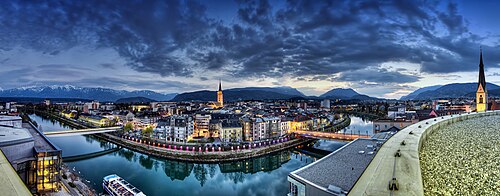
Villach is a city located in the southern part of Austria, specifically in the federal state of Carinthia. Situated at the confluence of the Drau and Gail rivers, Villach is the second-largest city in the region after Klagenfurt. It boasts a population of approximately 60,000 residents, making it a vibrant center of commerce, culture, and tourism within the Carinthian landscape. The city is nestled between the stunning peaks of the Alps and the picturesque shores of several lakes, including Lake Ossiach and Lake Faak, contributing to its appeal as a destination for nature lovers and outdoor enthusiasts.
Historically, Villach has roots that date back to Roman times, when it was known as "Filiacum." The remnants of its Roman heritage are still visible today, notably in the form of ancient architecture and archaeological sites. The city is characterized by a blend of historical and modern influences, evident in its charming old town, which features medieval buildings, narrow cobblestone streets, and the iconic Church of St. Jacob with its striking twin towers. Villach is also recognized for its cultural events, such as the renowned Villach Carnival, which attracts visitors from near and far. Beyond culture, the city serves as a gateway for various outdoor activities, including hiking, skiing, and cycling, appealing to tourists year-round.
Villach's economy is diverse, with strong sectors in trade, tourism, manufacturing, and technology. The city is conveniently located near major transport routes and is well-connected by rail, facilitating easy access to neighboring regions and countries. Its strategic location also makes it an important hub for business and logistics. Furthermore, Villach has made significant investments in infrastructure and urban development, further enhancing its status as a modern city while preserving its rich history and natural beauty. With its unique blend of picturesque landscapes, cultural heritage, and economic vitality, Villach stands out as a fascinating destination in Austria.
Facts about Villach
- Villach is known for its stunning natural scenery, nestled at the confluence of the Drava River and the beautiful Villach Alps.
- The city hosts the annual Villacher Kirchtag, a traditional folk festival that celebrates local culture, drawing crowds with its food, music, and parades.
- Villach boasts the largest hot springs in the area, with the nearby thermal spa, Kärnten Therme, attracting visitors for its wellness and relaxation offerings.
- The historic center of Villach features a unique blend of architectural styles, including Gothic, Baroque, and Renaissance buildings, making it a picturesque destination.
- Villach is home to the 'Ritterfest', a medieval festival that brings history to life with reenactments, crafts, and performances, distinct from other cities in Austria.
- As one of the oldest cities in Austria, Villach's history dates back to Roman times, when it was known as 'Word of the Romans'.
- The city is strategically positioned at the crossroads of several major transport routes, serving as a gateway to Southern Austria and neighboring countries.
- Villach is recognized for its vibrant arts scene, hosting several galleries and cultural events that highlight both local and international artists.
- The nearby ski resorts, like Gerlitzen, provide easy access to winter sports, distinguishing Villach as a hub for winter tourism in Carinthia.
- Villach is also known for its lively market square, where a weekly market showcases fresh produce and local crafts, fostering a strong community spirit.