Vilnius, Lithuania
- 542,366 people
- 12 places to visit
- 54.6872, 25.2797
Places to Visit (12)
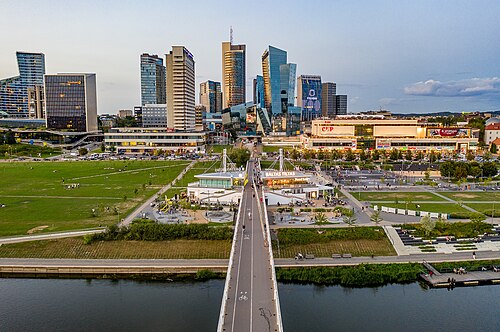
Vilnius, the capital city of Lithuania, is situated in the southeastern part of the country along the banks of the Neris River. With a population of approximately 580,000, it is the largest city in Lithuania and serves as an important cultural, political, and economic center. Its historical significance is recognized by UNESCO, which designated its Old Town a World Heritage Site in 1994. This area is one of the largest preserved medieval towns in Europe, featuring a blend of Gothic, Renaissance, and Baroque architecture. Among its notable landmarks are the Vilnius Cathedral, the Gediminas Castle Tower, and the Church of St. Anne, each reflecting the city's rich cultural tapestry and history.
Founded in the 14th century, Vilnius has a complex history influenced by various nations and cultures, including Polish, Russian, and Jewish heritage. The city thrived during the Grand Duchy of Lithuania and became a significant cultural hub in the region, particularly during the Renaissance. Today, Vilnius is known for its vibrant arts scene, with numerous galleries, theaters, and music festivals contributing to its cultural life. The city also boasts a diverse population and a lineage of traditions that celebrate its multicultural past. Modern Vilnius balances its historical roots with contemporary living, showcasing a dynamic urban environment marked by a burgeoning tech scene and innovative architecture. Its charming streets, lively cafés, and a strong sense of community make Vilnius an inviting destination for tourists and residents alike.
Facts about Vilnius
- Vilnius is the capital and largest city of Lithuania, known for its beautiful baroque architecture and vibrant cultural scene.
- The historic center of Vilnius is a UNESCO World Heritage Site, recognized for its well-preserved medieval urban structure.
- Vilnius is home to the Gediminas Tower, the last remaining part of the Upper Castle, which offers panoramic views of the city.
- The city features a unique bohemian neighborhood called Užupis, which declared itself an independent republic in 1997, complete with its own constitution.
- Vilnius has been a cultural melting pot throughout history, influenced by Polish, Jewish, Russian, and Belarusian communities.
- The Vilnius University, founded in 1579, is one of the oldest universities in Eastern Europe and is known for its stunning architecture.
- The city hosts the Vilnius International Film Festival, one of the most significant film festivals in the Baltic region, showcasing global cinema.
- Vilnius is known for its impressive array of churches, boasting over 40 different places of worship, reflecting the city's diverse religious history.
- The city is recognized for its cute, colorful street art, particularly in neighborhoods like the Warehouse District, which adds a modern flair to the historical landscape.
- Each year, Vilnius celebrates its St. Casimir's Fair, the oldest fair in Lithuania, filled with cultural events, crafts, and local cuisine.