Warendorf, Germany
- 38,707 people
- 12 places to visit
- 51.9514, 7.9841
Places to Visit (12)
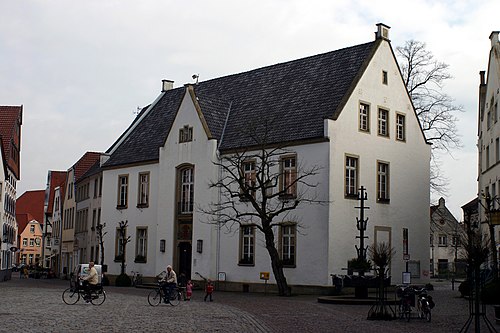
Warendorf is a small city located in North Rhine-Westphalia, Germany, known for its rich historical background and charming architecture. Situated approximately 30 kilometers east of Münster and along the Ems River, Warendorf has a population of around 37,000 residents. The city is distinguished by its well-preserved old town, which features picturesque half-timbered buildings, traditional brick houses, and a variety of historic churches. One of the most notable structures is St. John's Church (Johanneskirche), a stunning medieval church whose construction dates back to the 13th century, serving as an essential landmark in the city's skyline.
The local economy of Warendorf historically relied on agriculture and trade, but in recent years, it has diversified. The city is particularly renowned for its equestrian sports, and it hosts several key events, drawing riders and spectators from across the region. Warendorf is also home to the prestigious Landesreitschule, a state riding school that plays a significant role in training equestrian athletes. Cultural life in the city is vibrant, with various events taking place throughout the year, including markets, festivals, and fairs that showcase local crafts and gastronomy. Additionally, Warendorf's commitment to maintaining green spaces and promoting environmental sustainability has made it an attractive place to live.
Warendorf offers a unique blend of historical significance and modern-day charm. Its strategic location allows for convenient access to larger cities, making it a desirable residential area while simultaneously maintaining a strong sense of community. The city regularly engages in tourism promotion efforts, encouraging visitors to explore its unique landmarks, including the old town’s picturesque square and various museums that delve into the region's history. Overall, Warendorf represents a quintessential German town that remains deeply rooted in tradition while also embracing contemporary values.
Facts about Warendorf
- Warendorf is known as the 'City of the Horse' due to its long-standing equestrian culture, particularly its connection to warmblood horse breeding and training.
- The town hosts the annual Warendorfer Pferdemarkt (Warendorf Horse Market), one of the largest horse fairs in Germany, celebrating its equestrian heritage.
- Warendorf's historic old town is characterized by well-preserved medieval architecture, including the late Gothic Town Hall, which dates back to the 15th century.
- The Ems River flows through Warendorf, providing picturesque waterfront views and opportunities for recreation, which is unique compared to many inland cities in North Rhine-Westphalia.
- Warendorf has a unique tradition of molasses candy making, with local businesses that have been producing this sweet treat for generations.
- The city is home to the Warendorf Institute for Equestrian and Animal Sciences, a significant center for research and education in the equestrian field.
- Warendorf is part of the UNESCO World Heritage Site 'St. John's Day Procession', celebrated with elaborate decorations and public participation since 1858.
- The annual Warendorfer Wintermarkt (Winter Market) features handcrafted goods, local delicacies, and traditional German festive activities, drawing visitors from surrounding areas.
- Warendorf is located along the Ems Cycle Route, making it a popular stop for cyclists exploring the natural beauty of the region.
- The city has a unique landscape known as the 'Warendorfer Land', characterized by gentle hills and farmland, which sets it apart from the more industrialized areas of Germany.