Warsaw, Poland
- 1,702,139 people
- 19 places to visit
- 52.2297, 21.0122
Places to Visit (19)
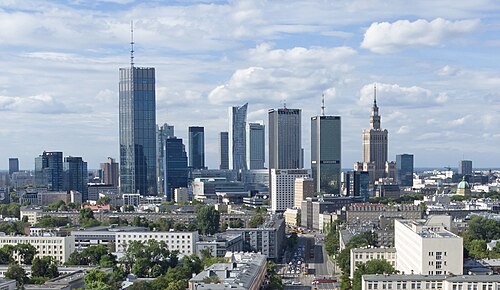
Warsaw, the capital of Poland, is a vibrant city located in the central part of the country along the Vistula River. With a population of approximately 1.8 million people, it is the largest city in Poland and serves as the political, economic, and cultural center of the nation. The city's history is marked by resilience and transformation; it has undergone significant changes, particularly during World War II when approximately 85% of its structures were destroyed. Following the war, Warsaw was meticulously rebuilt, blending historical architecture with modern structures, leading to its designation as a UNESCO World Heritage Site in 1980 for its reconstructed Old Town.
Today, Warsaw is renowned for its eclectic mix of architectural styles, including Gothic churches, neoclassical palaces, and modern skyscrapers. Notable landmarks include the Royal Castle, Wilanów Palace, and the Palace of Culture and Science, which symbolizes the city’s Communist past. The city is also a hub for education and research, with numerous universities and institutions contributing to its dynamic atmosphere. Cultural life in Warsaw is rich and diverse, featuring festivals, theaters, and museums that celebrate both Polish heritage and contemporary art. The city boasts a lively culinary scene, showcasing traditional Polish cuisine alongside various international influences. As a major economic center in Eastern Europe, Warsaw attracts numerous multinational companies and continues to grow in influence, making it a key player on the European stage.
Facts about Warsaw
- Warsaw is the capital city of Poland and the largest city in the country, serving as a political, economic, and cultural hub.
- The Warsaw Uprising of 1944 was a major World War II resistance operation led by the Polish underground state against Nazi Germany, marking a significant event in the city's history.
- The Old Town of Warsaw, a UNESCO World Heritage Site, was meticulously rebuilt after being almost completely destroyed during World War II, showcasing the city's resilience.
- Warsaw is home to the Palace of Culture and Science, a controversial Soviet-era skyscraper that is the tallest building in Poland and offers panoramic views of the city.
- The city's Royal Route features many historic landmarks, including the Royal Castle and Wilanów Palace, emphasizing Warsaw's status as a royal capital.
- Warsaw has a vibrant cultural scene with numerous theatres, museums, and annual events such as the Warsaw Film Festival and Chopin Piano Competition, celebrating its artistic heritage.
- The Vistula Boulevards offer a unique recreational area along the river, making Warsaw one of the few European capitals with prominent waterfront leisure spaces.
- Warsaw is known for its diverse architecture, ranging from Gothic and Baroque styles in the Old Town to modernist and contemporary buildings in the city center.
- The city has a significant Jewish heritage, being the site of the Warsaw Ghetto during WWII, and now hosts the POLIN Museum of the History of Polish Jews.
- Warsaw is recognized for its green spaces, with over 80 parks, making it one of the greenest capitals in Europe.