Wellington, South Africa
- 55,543 people
- 8 places to visit
- -33.6458, 18.9872
Places to Visit (8)
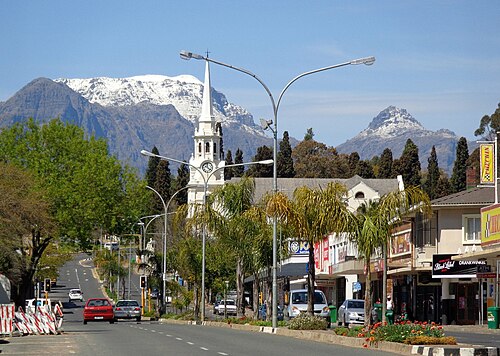
Wellington is a town situated in the Western Cape province of South Africa, approximately 70 kilometers northeast of Cape Town. Nestled in the picturesque Groenberg mountains, it is renowned for its stunning landscapes, rolling vineyards, and agricultural heritage. Founded in 1840 and originally named after the Duke of Wellington, the town has a rich history closely linked to the early settlers and the Dutch Reformed Church, which still plays a significant role in the community. The local economy thrives on agriculture, particularly in wine production, fruit farming, and olives, positioning Wellington as an integral part of South Africa's wine route. Its Mediterranean climate, characterized by hot, dry summers and cool, wet winters, further enhances its agricultural appeal.
Cultural diversity defines Wellington, home to several communities that contribute to a vibrant local culture. The town features various events and festivals, such as the annual Wellington Wine & Olive Route, which attracts tourists and celebrates local produce. Architectural highlights include the historic Dutch Reformed Church and distinctive Victorian buildings that reflect the town’s heritage. Education and community services are well-established, with several schools and institutions catering to the local population. Recreational activities in the area include hiking, mountain biking, and exploring the nearby Bainskloof Pass, which is a renowned route through the mountains connecting Wellington to the nearby town of Ceres. Overall, Wellington's blend of natural beauty, agricultural significance, and rich cultural life makes it an attractive destination for visitors and a cherished home for its residents.
Facts about Wellington
- Wellington, South Africa, is known for its wine production and is part of the prominent Cape Winelands region.
- The city is home to the well-known Wellington Museum, which showcases the town's history and culture, particularly its influence during the South African War.
- Wellington has a rich educational history; it is home to the well-established Wellington Campus of the University of the Western Cape.
- The annual Wellington Winter Music Festival celebrates local and national musical talent, distinguishing it as a cultural hub in the region.
- The town has several historical buildings, including the old Drostdy, which is a national monument representing its colonial past.
- Wellington is surrounded by beautiful mountains, including the popular Limietberg Nature Reserve, which offers outdoor activities and scenic views.
- It was originally established by the Dutch in 1838 and was named after the Duke of Wellington, reflecting its colonial history.
- Wellington is famous for its diverse agricultural practices, particularly the production of table grapes and olives, alongside its wine industry.
- The nearby Bovlei Valley is known for its boutique wineries, offering unique wine-tasting experiences that are distinct from other wine-producing areas in South Africa.
- Wellington's community celebrates its cultural diversity through various festivals, including the popular Wellington Cherry Festival, which showcases local produce.