Werl, Germany
- 32,149 people
- 4 places to visit
- 51.5584, 7.9114
Places to Visit (4)
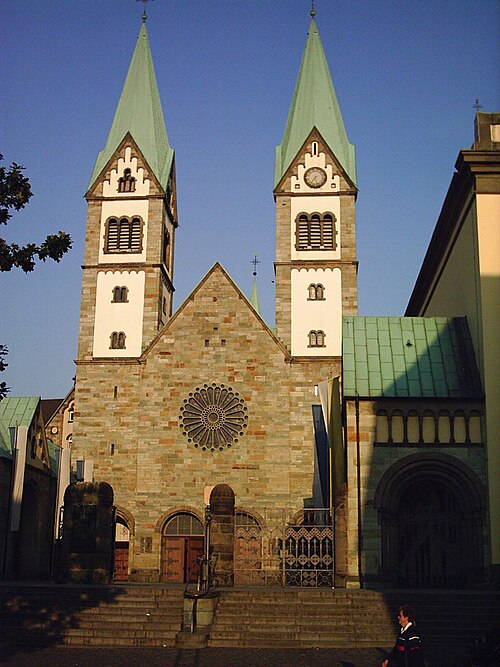
Werl is a small city located in North Rhine-Westphalia, Germany, within the district of Soest. With a population of approximately 30,000 residents, it combines a rich historical heritage with contemporary amenities. The city is positioned about 15 kilometers northeast of Dortmund and 20 kilometers southwest of Bielefeld, making it a part of the larger metropolitan area while still maintaining its distinct character. Werl's history dates back to its founding in the 8th century, which is reflected in its medieval architecture and historical sites. One of the city’s most notable landmarks is the Basilica of St. Romanus, a stunning Romanesque church that was originally built in the 11th century. This church serves as both a worship site and a monument to the city's historical roots.
The local economy of Werl is diverse, with a mix of agriculture, small businesses, and light manufacturing industries contributing to its development. Post-World War II, the city experienced substantial growth, aided by infrastructure improvements and its strategic location. Educational institutions, such as primary and secondary schools, ensure that residents have access to quality education, while various recreational facilities support a balanced lifestyle. Werl also hosts numerous cultural events and festivals, which reflect the vibrant community spirit of its citizens. The city's proximity to larger urban centers allows residents to enjoy both the tranquility of a smaller town and the economic and cultural opportunities of metropolitan living. In addition to its residential appeal, Werl is known for its natural surroundings, with parks and green spaces that offer opportunities for outdoor activities and relaxation. Overall, Werl is a city that harmoniously blends its historical significance with the benefits of modern living.
Facts about Werl
- Werl is known for its historic town center, featuring well-preserved medieval buildings and the iconic St. John's Church, which dates back to the 13th century.
- The city is famous for its annual fair called 'Werl's Schützenfest,' one of the largest marksmanship festivals in North Rhine-Westphalia, celebrating local tradition and community.
- Werl was historically significant as a center for trade and commerce in the Middle Ages, benefitting from its strategic location along trade routes.
- The city is home to the renowned 'Werl Monastery,' an important spiritual site that has existed since the 12th century, attracting visitors for its architecture and serene atmosphere.
- Werl has a unique connection to the Roman Empire, evidenced by archaeological finds that showcase Roman settlements in the region, linking its history to ancient times.
- The city hosts the Werler Kunsttage, an annual arts festival that features local artists and promotes contemporary art, distinguishing it from many other towns with less emphasis on the arts.
- Werl has a strong sporting culture, particularly known for its successful local football club, FC Bad Honnef, which has a dedicated following and contributes to community spirit.
- The city plays a vital role in the production of porcelain, with artisans and workshops continuing traditional craft techniques, making it a notable place for this art form.
- Werl's location near the Arnsberg Forest offers unique recreational opportunities, making the city a gateway for outdoor activities like hiking and cycling in natural surroundings.
- The city is a hub for modern technology and innovation, housing several tech companies and startups, which provide a contrast to the historical aspects of the city.