Wiesbaden, Germany
- 278,609 people
- 17 places to visit
- 50.0782, 8.2398
Places to Visit (17)
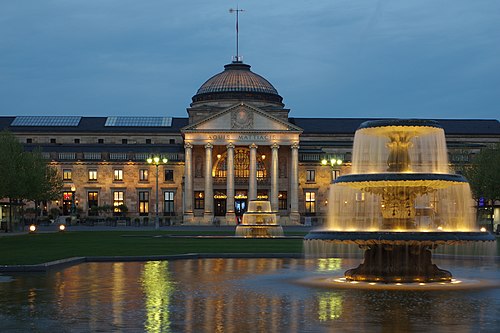
Wiesbaden, the capital of the German state of Hesse, is one of the oldest spa towns in Europe, renowned for its therapeutic hot springs. Located in the Rhine-Main area along the slopes of the Taunus mountains, Wiesbaden boasts a population of approximately 280,000 residents. The city is known for its rich history and cultural heritage, which dates back to Roman times when it was known as Aquae Mattiacorum. Numerous thermal springs, currently numbering over 15, continue to attract visitors seeking wellness treatments, making it a popular destination for health tourism. The most famous of these springs is the Kaiser-Friedrich-Therme, a historic thermal bath that underscores Wiesbaden's spa culture.
Wiesbaden's architectural landscape reflects its historical significance, with stunning neoclassical buildings, elegant villas, and impressive churches. The Stadtpalais, Kurhaus, and the Marktkirche are notable landmarks, showcasing the city's grand past. Wiesbaden is also recognized for its vibrant cultural scene, hosting various festivals, concerts, and events throughout the year. The city supports a range of artistic endeavors, including theaters and museums, which contribute to the local cultural life. Furthermore, its proximity to Frankfurt, just a short train ride away, enhances Wiesbaden's appeal, combining small-town charm with easy access to the amenities of a major urban center. With its picturesque parks, historic neighborhoods, and a blend of modern and traditional influences, Wiesbaden remains a significant cultural and economic hub in Germany.
Facts about Wiesbaden
- Wiesbaden is one of the oldest spa towns in Europe, with a history of therapeutic bathing that dates back to Roman times.
- The city is known for its numerous hot springs, with 26 different mineral springs, making it one of the primary spa cities in Germany.
- Wiesbaden is home to the elegant Kurhaus, a grand spa and casino complex that was completed in the 1900s, reflecting the city's spa culture.
- The city served as the capital of the State of Hesse and has been a political and administrative center for centuries.
- Wiesbaden hosted the earliest known casino in Germany, established in 1771, which continues to operate today in the Kurhaus.
- The annual 'Wiesbaden Wine Festival' celebrates the region's wine heritage, attracting visitors with food, music, and local wines.
- Wiesbaden is often associated with its beautiful parks and gardens, including the Kurpark, which is noted for its stunning landscape design.
- The city's historical architecture includes the neo-Renaissance-style Wiesbaden City Hall, completed in 1887.
- Wiesbaden was a favorite retreat for European nobility in the 18th and 19th centuries, leading to its nickname 'Nice of the North.'
- Wiesbaden and its twin city, Mainz, are part of a vibrant cultural and economic region along the Rhine River, fostering collaboration in various sectors.