Wilkes-Barre PA, United States
- 40,780 people
- 15 places to visit
- 41.2459, -75.8813
Places to Visit (15)
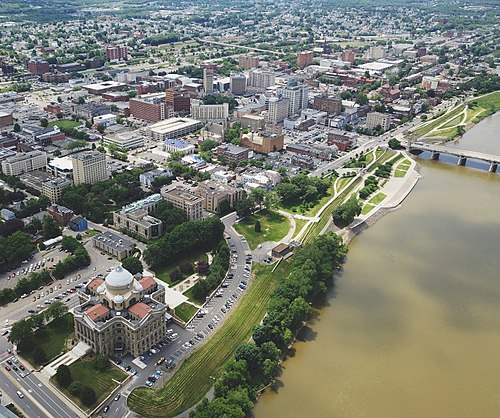
Wilkes-Barre is a city located in Luzerne County, Pennsylvania, in the United States. It lies along the Susquehanna River and is situated in the heart of the Wyoming Valley, approximately 15 miles south of Scranton. Founded in 1769 by a group of Welsh settlers, the city became an important center for coal mining during the Industrial Revolution, which significantly shaped its growth and development. Wilkes-Barre experienced a population boom in the late 19th and early 20th centuries as immigrants flocked to the area for employment in the mines and related industries. The city's name is derived from the names of British landowners, John Wilkes and Isaac Barre, and was officially incorporated in 1806.
Economically, Wilkes-Barre underwent considerable changes in the latter half of the 20th century as the coal industry declined. This shift led to urban challenges, including population loss and economic restructuring. In response, the city has diversified its economy, now focusing on healthcare, education, and retail services. Wilkes-Barre is home to several educational institutions, including Wilkes University, established in 1933, and King's College, which has been offering liberal arts education since 1946. The city also serves as a cultural hub, boasting attractions such as the F.M. Kirby Center for the Performing Arts, which hosts a variety of concerts, musicals, and theatrical performances.
Today, Wilkes-Barre is working towards revitalization and community engagement, with efforts to enhance its infrastructure and promote local businesses. The city hosts a range of community events, including the annual Fine Arts Fiesta, which celebrates the local arts scene, and the Wilkes-Barre Farmers Market, which supports local agriculture and entrepreneurship. Despite the challenges of its past, Wilkes-Barre's commitment to growth and development, coupled with its rich history and cultural heritage, continues to shape its identity in Northeast Pennsylvania.
Facts about Wilkes-Barre
- Wilkes-Barre is known as the 'Diamond City' due to its historical significance in the coal industry and the wealth generated from its natural resources during the 19th century.
- The city played a significant role in the Anthracite Coal Strike of 1902, which was pivotal in shaping labor relations in the United States.
- Wilkes-Barre is home to the F.M. Kirby Center for the Performing Arts, a historic theater that hosts a variety of performances and is a key cultural venue in the area.
- The city hosts the yearly 'Fine Arts Fiesta,' which is one of the oldest and largest community arts festivals in Pennsylvania, celebrating local artists and craftspeople.
- Wilkes-Barre features a notable architectural landmark, the Luzerne County Courthouse, which showcases Renaissance Revival architecture and is listed on the National Register of Historic Places.
- The Wyoming Valley, where Wilkes-Barre is situated, is recognized as a historically significant region due to its rich Native American heritage and early European settlement.
- Wilkes-Barre's River Common is a recreational area along the Susquehanna River, offering scenic views, walking paths, and public events, distinguishing it from urban centers lacking riverfront parks.
- The city is part of the Scranton-Wilkes-Barre metropolitan area and has a deep-rooted connection to the region's coal mining legacy and industrial development.
- Wilkes-Barre is also known for its diverse population and is home to several cultural events throughout the year, reflecting the community's various heritages.
- The 'Wilkes-Barre/Scranton Penguins,' an AHL team, represents the city and is affiliated with the NHL's Pittsburgh Penguins, contributing to the local sports culture.