Willenhall, United Kingdom
- 27,500 people
- 15 places to visit
- 52.585, -2.0576
Places to Visit (15)
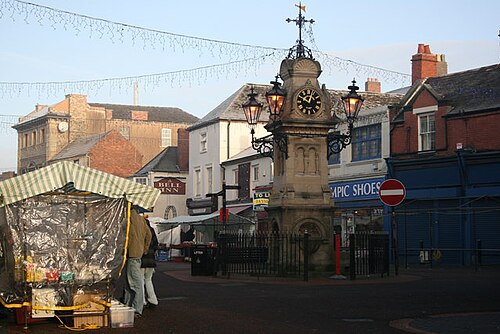
Willenhall is a town located in the Metropolitan Borough of Walsall, West Midlands, England. Historically part of Staffordshire, it lies approximately 5 miles north of Wolverhampton and 10 miles northwest of Birmingham. The town has a rich industrial heritage primarily known for its lock-making industry, which flourished in the 19th century. At its peak, Willenhall was recognized as the "Lock Capital of the World," with numerous factories producing a wide range of locks and ironmongery. The legacy of this industry is still evident today, with several businesses continuing to operate in this sector.
The origins of Willenhall can be traced back to the Anglo-Saxon period, with the first recorded mention in the Domesday Book of 1086 as "Wilenhale." Over the centuries, it transformed from a predominantly agricultural community into an industrial hub during the Industrial Revolution. Notable constructions, such as the St. Mary’s Church, reflect its historical significance, showcasing a blend of architectural styles ranging from Gothic to the more modern. Willenhall also boasts a number of heritage sites, including the old lock factories and the Willenhall Memorial Park, which serves as a gathering space for locals and visitors alike.
Beyond its industrial roots, Willenhall offers a diverse community and a range of amenities. The town center is home to various shops, eateries, and local businesses, fostering a vibrant atmosphere. Cultural events and festivals throughout the year, such as the annual Willenhall Carnival, highlight the community spirit and provide entertainment for residents. Additionally, Willenhall has good transport links, with access to major roads and public transportation connecting it to surrounding areas and larger cities. As a result, it remains an attractive location for both living and working, continuously evolving while cherishing its historical identity.
Facts about Willenhall
- Willenhall is known for its historic association with the lock-making industry, which earned it the nickname 'The Lock Capital of the World.'
- The town features the Willenhall Memorial Park, which was dedicated to those who served in the First and Second World Wars.
- Willenhall has a rich heritage of leatherworking, particularly in the production of saddles and other equestrian gear.
- The Willenhall markets hosts a weekly market that has been a staple of the community for over 150 years.
- St. Paul's Church in Willenhall is a notable landmark, originally built in 1823, featuring stunning Gothic architecture.
- The town was once home to several famous figures, including the poet William Sharp, who was born in Willenhall.
- Willenhall has a vibrant local football scene, boasting clubs like Willenhall Town FC, which has a history dating back to the 19th century.
- In the 1830s, Willenhall gained notoriety for its many workshops and foundries that significantly contributed to the industrial revolution in the region.
- The town is home to the Willenhall Historical Society, which works to preserve and promote the rich history of the area.
- Willenhall's vicinity to larger cities such as Wolverhampton and Walsall makes it an important hub for transport and commerce in the West Midlands.