Wittenberg, Germany
- 30,000 people
- 15 places to visit
- 51.8705, 12.6412
Places to Visit (15)
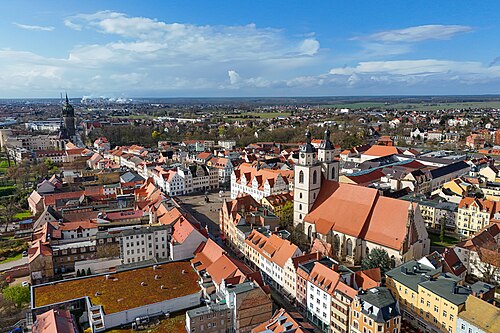
Wittenberg, a city in the federal state of Saxony-Anhalt, Germany, is renowned for its historical significance, particularly in the context of the Protestant Reformation. Situated on the banks of the Elbe River, Wittenberg has a population of approximately 50,000 residents. It is most famously associated with Martin Luther, who, in 1517, is believed to have nailed his Ninety-Five Theses to the door of the Castle Church, an act that spurred widespread religious reforms across Europe. This event marked the beginning of the Reformation, making Wittenberg a focal point of cultural and religious transformation during the 16th century.
The city boasts numerous landmarks related to its Reformation heritage, including the Castle Church, where Luther is said to have posted his theses, and its associated memorials. The Luther House, once Martin Luther’s residence and a center for Reformation ideas, is now a museum dedicated to the Reformation and the life of Luther. In 1996, the historic town center, including the Castle Church and Luther House, was designated a UNESCO World Heritage Site due to its importance in shaping modern Christian thought and Western culture. Beyond its religious legacy, Wittenberg also offers a charming blend of Renaissance and medieval architecture, with attractions such as the Market Square and the Stadtkirche (City Church) of St. Mary, which houses elements significant to Luther's life and work.
In contemporary times, Wittenberg not only attracts visitors interested in its historical and religious context but also serves as an educational center with institutions like the Leucorea Foundation for studies in the Reformation. The city hosts various cultural events, festivals, and exhibitions that highlight its rich history and contribute to its vibrant community life. As Wittenberg continues to preserve its cultural heritage, it serves as a living testament to the impact of the Reformation and remains a pivotal point of interest for scholars, tourists, and anyone seeking to understand the roots of modern Christianity.
Facts about Wittenberg
- Wittenberg is renowned as the birthplace of the Protestant Reformation, being the city where Martin Luther famously nailed his Ninety-Five Theses to the church door in 1517.
- The city is home to the Castle Church (Schlosskirche), which features the iconic door where Luther's theses were posted, now a UNESCO World Heritage site.
- Wittenberg was the residence of Martin Luther for much of his life, and the Luther House (Lutherhaus) where he lived is now a museum dedicated to his life and work.
- Wittenberg played a significant role in the spread of Lutheranism, with many key figures in the Reformation, including Philipp Melanchthon, associated with the city.
- The Wittenberg University, founded in 1502, is one of the oldest universities in Germany and was a crucial center for theological study during the Reformation.
- The city hosts the annual Wittenberg Renaissance Music Festival, celebrating the music of the Renaissance period, which is unique to the region.
- Wittenberg is the location of the Historic Wittenberg Market Square, which features architecture from various periods, including Renaissance and Gothic styles.
- The city is part of the Luther Trail, a cultural route linking significant sites associated with Martin Luther and the Reformation across Germany.
- Wittenberg has a distinct mixture of architectural styles resulting from its historical significance, including many well-preserved Renaissance buildings.
- The town's commitment to preserving its Reformation heritage is showcased in the Wittenberg Reformers' Memorial, honoring Martin Luther and his contemporaries.