Wittenberge, Germany
- 20,171 people
- 7 places to visit
- 52.995, 11.7525
Places to Visit (7)
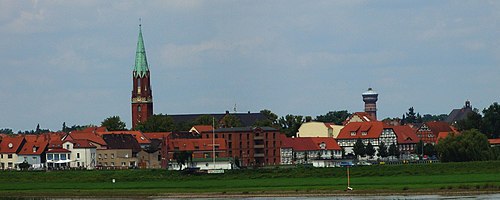
Wittenberge is a small city located in the state of Brandenburg, Germany, situated on the banks of the Elbe River. It has a rich history dating back to the early Middle Ages, with its first documented mention occurring in 1301. The city emerged as a significant trade center due to its strategic position along vital transportation routes. Over the centuries, Wittenberge developed an economy based largely on industries such as textiles, machinery, and food processing, benefiting from its proximity to Hamburg and the larger region of northern Germany.
The architectural landscape of Wittenberge reflects its historical evolution, featuring a blend of Gothic, Renaissance, and modern styles. Notable landmarks include the St. Stephen’s Church, built in the early 19th century, which showcases beautiful neo-Gothic elements, and the old town hall, a hallmark of medieval architecture. The city also boasts a picturesque riverside promenade along the Elbe, providing a scenic space for recreation and community activities. Wittenberge is well-connected by transportation networks, including rail and road links, making it accessible for both residents and visitors.
In recent years, Wittenberge has focused on revitalizing its economy and enhancing the quality of life for its citizens. Efforts to promote tourism highlight its cultural heritage and natural beauty, while initiatives aimed at fostering local entrepreneurship are gaining momentum. The city's location near the UNESCO Biosphere Reserve of Flusslandschaft Elbe provides opportunities for eco-tourism and outdoor activities, attracting nature enthusiasts. Despite its small size, Wittenberge's charming mix of history, industry, and natural surroundings continues to shape its identity as a vibrant part of the Brandenburg region.
Facts about Wittenberge
- Wittenberge is known for its rich history as a key shipping hub on the Elbe River, which played a significant role in the economic development of the region.
- The city features the largest wooden water tower in Europe, built in 1886, which is a unique architectural landmark.
- Wittenberge hosts the annual 'Wittenberger Stadtfest', a local festival that celebrates the city's culture and community with various events and activities.
- The 'Old Town' of Wittenberge is characterized by its well-preserved cobblestone streets and historical buildings, giving visitors a glimpse into the city’s past.
- Wittenberge was once home to a large number of textile factories, making it an important center for the textile industry in the late 19th and early 20th centuries.
- The city is notable for its unique location at the confluence of the Elbe and Lachte rivers, providing picturesque waterfront views.
- Wittenberge features a statue of its famous son, the playwright und poet Franz Fühmann, who was born here in 1922.
- The Elbe River Cycling Path runs through Wittenberge, attracting cycling enthusiasts and tourists looking to explore the natural beauty of the region.
- The city’s population management during the East German era led to unique urban development patterns that contrast with other cities in former East Germany.
- Wittenberge has a strong commitment to preserving its local environment, with several parks and green spaces that enhance the quality of life for residents.