Włocławek, Poland
- 120,339 people
- 7 places to visit
- 52.6483, 19.0677
Places to Visit (7)
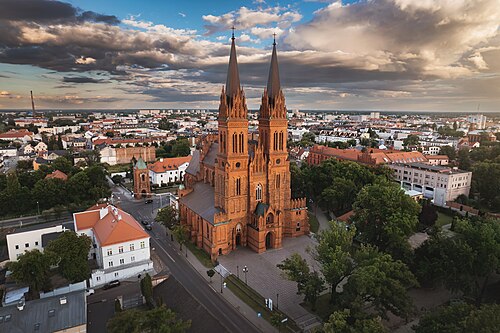
Włocławek is a city situated in central Poland, in the Kuyavian-Pomeranian Voivodeship, along the banks of the Vistula River. Historically, it has been an important trade and transportation hub due to its strategic location. The city's origins date back to the early Middle Ages, with its establishment as a trading settlement around the 9th century. Włocławek received city rights in 1258 and has since developed into a significant center for commerce, education, and culture in the region. The city is known for its rich history and architectural heritage, featuring landmarks such as the Cathedral of the Assumption of the Blessed Virgin Mary, a stunning example of Gothic architecture, and the 19th-century buildings that reflect its industrial past, including the historical granaries along the riverbank.
Włocławek's economy has traditionally been linked to agriculture and trade thanks to its fertile surroundings. However, during the 19th and 20th centuries, the city underwent substantial industrialization. It became home to various manufacturing enterprises, including the production of ceramics, textiles, and chemicals. Today, Włocławek continues to diversify its economic base, with growing sectors in education and health services, as well as an emphasis on developing tourism. The city is a popular destination for visitors interested in exploring its historical sites, such as the remains of the medieval castle and numerous museums, which showcase the region's art and historical artifacts. The vibrant cultural scene is augmented by annual events and festivals that highlight local traditions, thus reinforcing Włocławek's identity and fostering community engagement.
In recent years, Włocławek has also focused on improving its infrastructure and enhancing its status as a center for education, with numerous academic institutions, including branches of public universities. This has led to a youthful population and a thriving atmosphere that embraces modernity while respecting its historical roots. With its picturesque landscape along the Vistula River and a commitment to sustainable development, Włocławek is not only a city of historical significance but also an evolving urban center poised for future growth and innovation.
Facts about Włocławek
- Włocławek is known for its unique Cathedral of St. Mary, a Gothic structure dating back to the 14th century, featuring remarkable stained glass and sculptures.
- The city played a pivotal role in the Polish Reformation, being the birthplace of the first Protestant Church in Poland in the early 16th century.
- Włocławek is famous for its historical production of high-quality ceramics, particularly the traditional 'Włocławek Pottery' that features distinctive patterns and colors.
- The Vistula Boulevards along the Vistula River in Włocławek offer a unique recreational space for residents and visitors, making it one of the most picturesque spots in the region.
- Włocławek is home to the largest hydroelectric power station in Poland, the Włocławek Dam, which has been in operation since 1975 and plays a crucial role in the country's energy supply.
- The city hosts the annual Włocławek Jazz Festival, which attracts jazz musicians and enthusiasts from across the country and beyond, emphasizing the city's vibrant cultural scene.
- Włocławek has a unique history of being a significant center for the cotton industry in the 19th century, which contributed to its economic growth and urban development.
- The city is also known for its extensive parks and green spaces, including the landscaped Park on the Vistula, showcasing the area's commitment to maintaining natural beauty amidst urban development.
- Włocławek has a rich sporting heritage, particularly in basketball, with several teams competing in national leagues and successes in various championships.
- The local Museum of the Kujawy and Dobrzyń Land in Włocławek contains numerous artifacts and exhibitions that celebrate the unique history and culture of the Kujawy region.