Worcester, United Kingdom
- 101,659 people
- 16 places to visit
- 52.1941, -2.2191
Places to Visit (16)
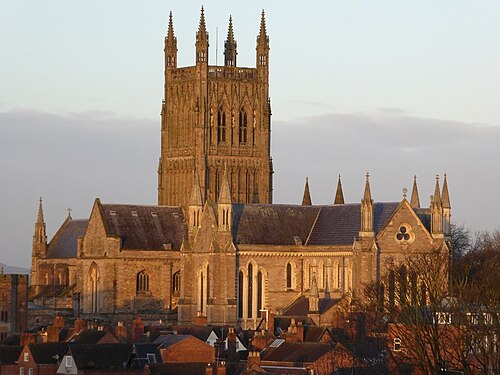
Worcester, a historic city located in the West Midlands of England, is situated on the banks of the River Severn. Known for its rich cultural heritage, Worcester has been inhabited since ancient times, with evidence of Roman settlements in the area. Today, it is characterized by its stunning architecture, including the iconic Worcester Cathedral, which dates back to the 11th century and showcases remarkable Gothic and Norman styles. The city has played a significant role in English history, particularly during the English Civil War, when it was the site of the final battle in 1651, leading to the defeat of King Charles II.
The city boasts a diverse economy that has evolved over the years from traditional manufacturing to include sectors such as education, healthcare, and technology. The presence of the University of Worcester has contributed to the city's vibrant atmosphere, attracting a substantial student population and fostering innovation and development. Worcester is also known for its role in the production of porcelain, particularly the renowned Worcester porcelain, which gained international acclaim in the 18th century. Moreover, the city is famous for its Worcestershire sauce, a fermented condiment that originated here in the early 19th century.
Culturally, Worcester offers a range of attractions, including numerous museums, galleries, and theaters that highlight its artistic heritage. The annual Worcester Festival showcases local talent and attracts visitors from across the country. The city's location, with easy access to the Malvern Hills and surrounding countryside, makes it a desirable destination for nature lovers and outdoor activities. With its blend of history, culture, and modern amenities, Worcester continues to be a vibrant and appealing place to live, work, and visit.
Facts about Worcester
- Worcester is home to the historic Worcester Cathedral, which dates back to the 11th century and is known for its stunning Norman architecture.
- The city is famous for its association with Worcestershire sauce, a fermented condiment invented in the early 19th century by two chemists, John Wheeley Lea and William Perrins.
- Worcester's Royal Porcelain factory was established in 1751 and was renowned for producing fine porcelain that is highly collectible today.
- The River Severn flows through Worcester, making it one of the few cities in the UK with a prominent river running alongside its city center, offering picturesque walking routes.
- Worcester was the site of the Battle of Worcester in 1651, the last major battle of the English Civil War, which resulted in the defeat of King Charles II.
- The Commandery is a historic building in Worcester that served as the Royalist headquarters during the Battle of Worcester and is now a museum showcasing civil war history.
- Worcester is also known for its impressive collection of medieval stained glass, particularly in the Cathedral, which highlights its artistic heritage.
- The city is home to one of the oldest known cricket clubs in the world, Worcestershire County Cricket Club, established in 1865.
- Worcester's Astronomical Observatory, established in 1834, was significant in the advancement of astronomical studies and contributed to our understanding of the solar system.
- In 2012, Worcester was recognized for its sustainability efforts with the award of the Sustainable City Award from the UK Government.