Wrocław, Poland
- 634,893 people
- 18 places to visit
- 51.1093, 17.0386
Places to Visit (18)
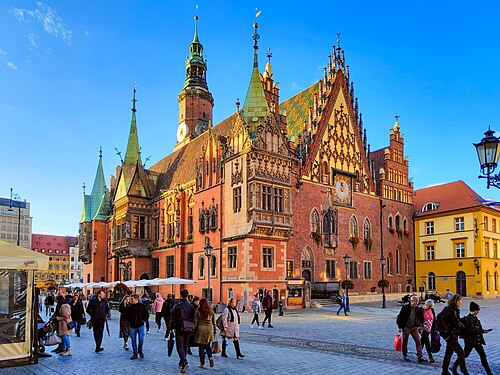
Wrocław is a vibrant city located in southwestern Poland, known for its rich history and cultural diversity. As the capital of the Lower Silesian Voivodeship, Wrocław has a population of around 640,000 people, making it the fourth largest city in Poland. Its geographical position on the Oder River has historically made it a strategic trade center. The city’s origins date back to the 10th century, and over the centuries, it has been influenced by various cultures and nationalities, including Polish, Czech, and German. This multicultural heritage is reflected in its architecture, language, and traditions. Wrocław was designated a European Capital of Culture in 2016, highlighting its significant contributions to arts and culture.
Wrocław boasts a wealth of historical landmarks and modern attractions. The Market Square (Rynek), one of the largest medieval squares in Europe, is surrounded by colorful townhouses and the Gothic-style Old Town Hall, which now houses a museum. The city's skyline is characterized by the stunning Centennial Hall, a UNESCO World Heritage Site, noted for its innovative concrete structure built in 1913. Visitors are captivated by the unique attractions scattered throughout the city, such as the Wrocław Cathedral on Ostrów Tumski Island and the Panorama of the Battle of Racławice, a monumental 19th-century painting depicting a famous Polish victory. Additionally, Wrocław is renowned for its dwarfs—small bronze statues scattered around the city that have become a symbol of local humor and resilience, originating from peaceful protests against the communist regime in the 1980s.
Wrocław is also an educational hub, home to several universities, including the University of Wrocław, which was founded in 1702. The city’s vibrant cultural scene includes numerous theaters, galleries, and festivals, such as the Wrocław Nonstop festival and the Total Festival, which celebrate a variety of artistic expressions and community involvement. The city's economy has grown rapidly in recent years, with sectors such as technology, finance, and logistics playing essential roles. Wrocław’s blend of historical significance, cultural richness, and modern development makes it a dynamic place to live and visit, offering a unique experience to both residents and tourists alike.
Facts about Wrocław
- Wrocław is known as the 'Venice of Poland' due to its numerous islands and over 130 bridges, making it one of the most picturesque cities in the country.
- The city is home to the Wrocław University, one of the oldest and most prestigious universities in Poland, founded in 1702.
- Wrocław was designated a European Capital of Culture in 2016, highlighting its vibrant cultural scene and numerous artistic events.
- The Wrocław Market Square (Rynek) is one of the largest medieval town squares in Europe, featuring colorful townhouses and the Gothic-style Old Town Hall.
- Wrocław boasts a unique dwarf statue phenomenon, with over 400 small bronze dwarf figures scattered throughout the city, symbolizing its rich history of resistance against oppression.
- The Centennial Hall (Hala Stulecia), a UNESCO World Heritage site, is an architectural marvel built in 1913 and represents an important example of early modernist architecture.
- Wrocław is one of the few cities in Poland to have hosted the FIFA World Cup, serving as one of the venues during the UEFA Euro 2012 football championship.
- The city has a rich Jewish heritage, with significant historical sites including the White Stork Synagogue, which serves as a center for Jewish culture and history.
- Wrocław played a pivotal role in Poland's history as a site of key events during World War II and the Solidarity Movement in the 1980s.
- The city's location at the meeting point of several major trade routes has contributed to its multicultural atmosphere, blending various architectural styles and traditions.