Würzburg, Germany
- 133,731 people
- 16 places to visit
- 49.7913, 9.9534
Places to Visit (16)
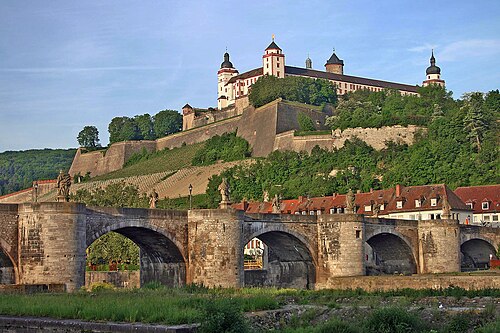
Würzburg is a historic city located in the Franconia region of Bavaria, Germany, approximately 120 kilometers northeast of Frankfurt. Situated on the banks of the Main River, it has a population of around 124,000 residents, making it one of the larger cities in the area. The city's history dates back to Roman times, and it has been a significant cultural and ecclesiastical center since becoming a bishopric in the 8th century. Würzburg is renowned for its impressive baroque architecture, particularly the Residenz, a UNESCO World Heritage Site that served as the residence of the prince-bishops. Completed in the 18th century, the Residenz features stunning frescoes by Giovanni Battista Tiepolo and beautifully landscaped gardens, showcasing the splendor of the era.
The city is also known for its vibrant wine culture, being part of the Franconian wine region, which is famous for its distinct white wines, particularly those made from the Silvaner grape. Visitors can explore numerous vineyards and enjoy wine tastings in the surrounding countryside. In addition to its wine heritage, Würzburg is home to several prestigious educational institutions, including the University of Würzburg, one of the oldest universities in Germany, founded in 1402. This academic environment contributes to the city's youthful atmosphere and cultural vibrancy. With its rich history, architectural beauty, and wine tradition, Würzburg continues to attract tourists and scholars alike, making it a significant hub of culture and learning in Germany.
Facts about Würzburg
- Würzburg is home to the Würzburg Residence, a UNESCO World Heritage Site, which is considered one of the finest palaces in Europe and features stunning baroque architecture.
- The city is famous for its fortified hilltop fortress, Marienberg Fortress, which offers panoramic views of the city and the Main River, dating back to the 13th century.
- Würzburg is renowned for its Franconian wine, particularly its white wines made from the Silvaner grape, with the region being one of Germany's top wine-producing areas.
- The city has a unique history of hosting the infamous Würzburg witch trials in the 17th century, where a large number of individuals were accused of witchcraft.
- Würzburg's Old Main Bridge, adorned with statues of saints, is a historic pedestrian bridge that connects the old town with the contemporary part of the city.
- The University of Würzburg, founded in 1402, is one of the oldest universities in Germany and has produced seven Nobel laureates, notably in the fields of medicine and chemistry.
- The annual Würzburg Mozart Festival celebrates the life and music of Wolfgang Amadeus Mozart, as the composer briefly lived in the city with his family.
- Würzburg is known for its large collection of art in the Museum im Kulturspeicher, showcasing contemporary art along with works from the Dürer and Rembrandt eras.
- The city is also famous for its traditional Franconian cuisine, including dishes like Schäufela (pork shoulder) and the local specialty, Würzburg onion tart.
- Würzburg is an important cultural center in Franconia and regularly hosts various festivals and events, including the Würzburger Volksfest, celebrating local traditions and food.