Wuppertal, Germany
- 360,797 people
- 17 places to visit
- 51.2562, 7.1508
Places to Visit (17)
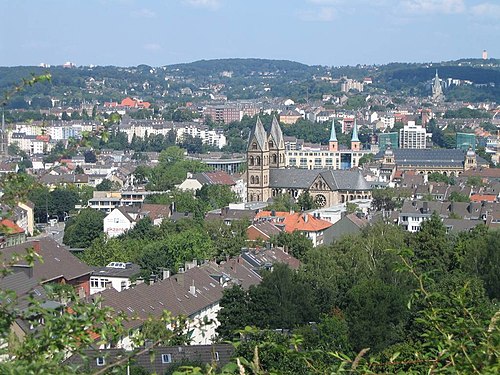
Wuppertal, a prominent city nestled in the North Rhine-Westphalia region of Germany, is known for its unique topography and industrial heritage. Founded in 1929 through the amalgamation of several towns, Wuppertal lies in a deep valley along the Wupper River, surrounded by lush green hills which significantly influence its urban landscape. The city has a population of approximately 350,000 residents and serves as an important economic hub, historically associated with the textile industry and chemical manufacturing. Wuppertal’s industrial significance was underscored during the 19th century when it became a focal point for innovation and production, attracting a workforce and fostering the establishment of various enterprises.
One of Wuppertal's most iconic features is the Wuppertal Suspension Railway (Wuppertaler Schwebebahn), which opened in 1901. This elevated monorail system not only serves as a crucial mode of transportation for residents but has also become a cultural symbol of the city, offering scenic views as it glides above the streets and the Wupper River. Wuppertal is also known for its contributions to arts and culture, being the birthplace of influential figures such as the choreographer Pina Bausch, who played a significant role in developing modern dance. The city's cultural offerings include theaters, museums, and galleries, attracting visitors and enriching the local community. Additionally, Wuppertal places high importance on sustainability and green space, with numerous parks and recreational areas that promote outdoor activities. The blend of industrial history, cultural initiatives, and natural beauty makes Wuppertal a noteworthy destination within Germany.
Facts about Wuppertal
- Wuppertal is famous for its unique Schwebebahn, an elevated suspension railway that has been in operation since 1901, making it one of the oldest of its kind in the world.
- The city is home to the Historisches Zentrum Wuppertal, which holds the largest collection of works by renowned sculptor and inventor Friedrich Albrecht, who was born here in 1839.
- Wuppertal's name is derived from the Wupper river, which runs through the city and further distinguishes it from other cities in the Ruhr area, known for their industrial backgrounds.
- The Wuppertal Wonder, a series of mathematical and artistic concepts developed by the mathematician and artist Johann Heinrich von Thünen, originated in the city and connects science with the arts.
- Wuppertal has been recognized for its commitment to public transport innovation, particularly with the Schwebebahn, which is celebrated for its unique engineering and design.
- The city was a significant center of textile manufacturing in the 19th and early 20th centuries, which shaped its economic landscape and social community.
- Wuppertal is also known for the Tanztheater Wuppertal, founded by the choreographer Pina Bausch, which is internationally acclaimed for its innovative dance-theater performances.
- The city's botanical garden, the Botanischer Garten Wuppertal, is notable for its extensive plant collections and its role in conservation efforts, featuring over 4,000 species.
- Wuppertal hosts the annual Wuppertaler Stadtfest, which is a city festival celebrating local culture, music, and gastronomy, attracting thousands of visitors each year.
- The city's unique architecture includes numerous examples of the 'Wuppertal School' style, characterized by colorful façades and creative designs that reflect its artistic heritage.