Xi’an, China
- 9,600,000 people
- 11 places to visit
- 34.2658, 108.9541
Places to Visit (11)
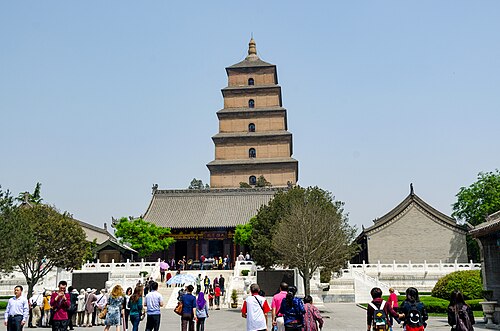
Xi’an, located in the Shaanxi Province of north-central China, is one of the country's oldest cities and serves as a vital cultural and historical hub. With a history spanning over 3,100 years, Xi'an was the capital for several dynasties, including the Zhou, Qin, Han, and Tang, making it a significant political and cultural center throughout Chinese history. The city is best known for the Terracotta Army, a collection of clay sculptures that depict the armies of Qin Shi Huang, the first Emperor of China. Discovered in 1974, these artifacts date back to around 210-209 BCE and exemplify the artistry and craftsmanship of ancient China. Xi’an is also recognized as the eastern terminus of the Silk Road, which was a vital trade route that facilitated cultural, commercial, and technological exchanges between the East and the West.
The city's rich heritage is reflected in its well-preserved ancient structures, including the iconic City Wall, one of the most complete city walls that remains from the medieval period in China. Originally built during the Ming dynasty, the wall spans approximately 14 kilometers and showcases impressive architecture, offering panoramic views of both the ancient and modern parts of Xi'an. Additionally, Xi’an features the Big Wild Goose Pagoda and the Small Wild Goose Pagoda, both of which are significant Buddhist relics and demonstrate the dissemination of Buddhism in ancient China. The city's vibrant Muslim Quarter, with its bustling markets and eateries, showcases the local blend of Han Chinese and Muslim cultures with famous dishes such as Biangbiang noodles and the popular lamb skewers. Xi’an’s diverse history, breathtaking sites, and culinary heritage attract millions of tourists each year, establishing it as a must-visit destination for those interested in Chinese culture and history.
Facts about Xi’an
- Xi'an was the capital of 13 dynasties, including the Zhou, Qin, Han, and Tang, making it one of the oldest and most historically significant cities in China.
- The city is home to the Terracotta Army, a massive collection of life-sized sculptures buried with the first Emperor of China, Qin Shi Huang, in 210-209 BCE.
- Xi'an is part of the ancient Silk Road, serving as a pivotal hub for trade and cultural exchange between the East and the West.
- The city features the ancient City Wall, which is one of the best-preserved city walls in China and dates back to the Ming Dynasty.
- Xi'an boasts the Big Wild Goose Pagoda and Small Wild Goose Pagoda, significant Buddhist structures that reflect the city's historical role in the spread of Buddhism in China.
- The Muslim Quarter in Xi'an is renowned for its vibrant street food scene and reflects the city’s rich Islamic heritage, making it unique among Chinese cities.
- Xi'an hosted the 2016 G20 summit, showcasing the city's importance in modern global economic discussions.
- The Shaanxi History Museum in Xi'an exhibits a vast collection of artifacts that provide insights into the history and culture of the Shaanxi province and ancient China.
- The city celebrates the Xi'an International Wild Goose Pagoda Art Festival, which features traditional performances, attracting artists and tourists from across the globe.
- Xi'an is known for its distinctive local cuisine, including dishes such as Biangbiang noodles and Yangrou Paomo (bread soaked in mutton soup), which are unique to the region.