Xianyang, China
- 1,034,081 people
- 6 places to visit
- 34.3293, 108.7093
Places to Visit (6)
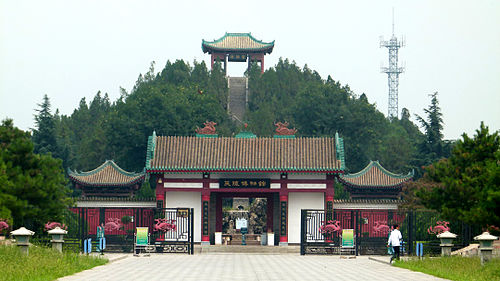
Xianyang, located in Shaanxi Province, China, is an ancient city with a rich historical backdrop. As the capital of the Qin Dynasty (221-206 BCE), it played a pivotal role in Chinese history as the epicenter of political power, military strength, and cultural development during this period. The city is situated just northwest of the modern city of Xi'an, which was historically known as Chang'an, making Xianyang an integral part of the ancient Silk Road. The region has a long history that dates back over 3,000 years, with its archaeological significance highlighted by numerous relics and structures that tell the story of its imperial past.
One of the most notable landmarks in Xianyang is the tomb of the first Emperor of China, Qin Shi Huang, located nearby. This site is part of a larger burial complex that includes the famous Terracotta Army, which was discovered in 1974 and features thousands of life-sized clay soldiers created to accompany the emperor in the afterlife. Xianyang also boasts several other historical sites, such as the Xianyang Museum, which houses artifacts from the Qin Dynasty and offers insights into the evolution of Chinese civilization. In contemporary times, Xianyang has modernized while preserving its historical significance. The city has developed into an important transportation hub, with connections to rail and air transit facilitating access to both domestic and international destinations. Today, Xianyang serves not only as a historical destination for tourists keen on exploring China’s ancient heritage but also as an emerging center for industry and commerce in the region.
Facts about Xianyang
- Xianyang was the capital of the Qin Dynasty, which unified China in 221 BC, making it one of the most historically significant cities in the country's early imperial history.
- The city is home to the remnants of the ancient city wall of Xianyang, which dates back to the Qin Dynasty and is a rare example of early Chinese urban planning.
- Xianyang is located near the famous Terracotta Army, a UNESCO World Heritage site, which was built to accompany the tomb of Qin Shi Huang, the first emperor of China.
- The city is known for its historical significance in the development of Chinese governance, being the first imperial capital, where the centralized feudal system began.
- Xianyang served as a major economic and cultural hub during the Qin and early Han dynasties, playing a key role in the establishment of the Silk Road trade routes.
- The famous Xianyang Airport is one of the major transport hubs serving the ancient capital region, improving connectivity between Shaanxi province and other parts of China.
- Xianyang is notable for its archaeological sites, including the Han Yang Ling mausoleum, which features a unique underground museum showcasing the burial customs of the Han dynasty.
- The city has a unique history of being the birth and burial place of several significant historical figures from the Qin and Han dynasties, including the tomb of Li Si, the chancellor of the Qin dynasty.
- Xianyang’s local cuisine features distinctive Shaanxi flavors, including the famous ‘Yangrou Paomo’ (lamb soup with bread) that differentiates it from dishes found in other regions.
- The educational landscape of Xianyang is highlighted by institutions such as Northwest University and Xianyang Normal University, contributing to its reputation as a center for higher learning in northwest China.