Xingtai, China
- 798,770 people
- 5 places to visit
- 37.0705, 114.5044
Places to Visit (5)
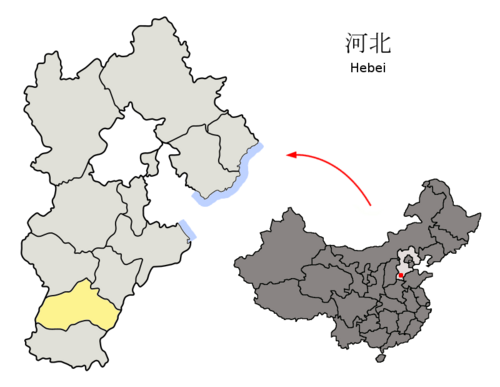
Xingtai is a city located in the southern part of Hebei Province, China. Historically known as a significant cultural and economic center, it lies approximately 150 kilometers south of Beijing and 70 kilometers north of Shijiazhuang, the provincial capital. As of the latest census, Xingtai has a population of over 7 million people, making it one of the more populous cities in the province. The area has a rich history, with archaeological evidence suggesting habitation over 3,000 years ago. Xingtai's name translates to "the place of auspiciousness," reflecting its long-standing cultural significance.
Economically, Xingtai benefits from a diverse industrial base, including sectors such as textiles, machinery, and metallurgy. The city has modernized its infrastructure and is becoming increasingly integrated into the regional economy, which is characterized by robust agricultural production due to its fertile land. Additionally, Xingtai serves as a transportation hub with multiple railways and highways connecting it to major cities in northern China, facilitating trade and commerce. The regional government has invested in various development projects to spur growth, focusing on sustainable development and enhancing the quality of urban life.
Culturally, Xingtai is known for its traditional handicrafts, notably in areas such as ceramics and silk production. The city's heritage is celebrated through various festivals and events that showcase local traditions, including the famous Lantern Festival, which features vibrant displays and performances. The surrounding region offers numerous historical sites, including ancient temples and remnants of the Liao and Ming dynasties. Furthermore, Xingtai is home to several notable landmarks, including the famous Yutai Ancient Town and the Red Cliff Mountain, which attract both domestic and international tourists, emphasizing the city’s blend of history and modernity. As Xingtai continues to develop, it remains a city where ancient traditions meet contemporary progress, making it an intriguing destination for both visitors and researchers of Chinese history and culture.
Facts about Xingtai
- Xingtai is known as the birthplace of the famous Chinese philosopher and educator, Confucius's disciple, Zhangzi, which adds significant historical importance to the city.
- The city is one of the key urban centers in Hebei province and is famed for its unique role in the production of traditional Chinese calligraphy brushes, making it distinct in the artistic community.
- Xingtai is home to the ancient temple of the Northern Heavenly King, which dates back to the Ming Dynasty and is a significant cultural landmark.
- The city has a rich weaving history and is renowned for its textile industry, particularly for producing high-quality cotton and wool textiles.
- Xingtai hosts the annual Xingtai International Stone Sculpture Festival, attracting artisans and tourists, highlighting its artistic cultural heritage.
- It is the site of the Puzhou Ancient City ruins, which date back to the Han Dynasty, showcasing the area's long-standing historical significance.
- Xingtai is strategically located at the crossroads of transportation networks, making it an essential hub for commerce and trade in Northern China.
- The city is often recognized for its agricultural productivity, particularly its production of cereals and fruits, contributing extensively to the local economy.
- Xingtai has been designated as a national historical and cultural city due to its well-preserved ancient architecture and rich history.
- The Xingtai Grand Canal is unique in that it connects several historical sites and is part of the extensive network of waterways that contributed to trade and transport in ancient China.