Yala, Thailand
- 93,558 people
- 5 places to visit
- 6.5411, 101.2804
Places to Visit (5)
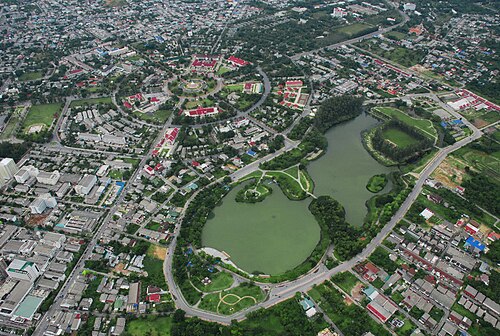
Yala is a city in southern Thailand, serving as the capital of Yala Province. Located approximately 1,100 kilometers south of Bangkok and close to the Malaysia border, it occupies a strategic position in the region. The city has a population of around 100,000 people, and its demographic makeup includes a mix of ethnic Thai, Malay, and Chinese communities. The Malay influence is particularly strong, given the proximity to Malaysia, which shapes the culture, language, and lifestyle of the residents. The area is known for its lush landscapes, including mountains and forests, interspersed with rivers and agricultural land, primarily focused on rubber and palm oil production.
Yala is characterized by its rich cultural heritage and diversity. The city features a blend of traditional Thai and Malay architecture, visible in its mosques and temples. Notable attractions in and around Yala include the Wat Chao Yai (Chao Yai Temple) and the Yala Night Market, popular for its variety of local cuisines and vibrant atmosphere. The city has been affected by regional unrest over the past two decades due to separatist insurgency in the southern provinces, leading to security restrictions and impacting tourism. Despite these challenges, Yala remains a gateway to exploring the natural beauty of the surrounding area, including national parks, waterfalls, and wildlife sanctuaries, such as Khao Nam Khang National Park, which offers opportunities for hiking and bird-watching.
Today, Yala is slowly recovering from the impacts of conflict and seeking to promote itself as a center of tourism and trade, capitalizing on its cultural uniqueness and natural resources. Local authorities are working to improve infrastructure and enhance safety measures, aiming to attract visitors interested in experiencing the rich traditions and stunning landscapes of Southern Thailand. Despite security concerns, Yala's unique blend of cultures, scenic beauty, and resilient spirit present opportunities for development and cross-cultural exchange in the years to come.
Facts about Yala
- Yala is known for its rich cultural diversity, with significant populations of Thai, Malay, and Chinese communities, making it a unique melting pot of cultures in Thailand.
- The city serves as the capital of Yala Province and is located in the southern part of Thailand, bordering Malaysia, which influences its cultural and economic activities.
- Yala is home to many beautiful mosques, reflecting the Islamic heritage of the region, such as the Yala Mosque, which stands out due to its stunning architecture.
- The region around Yala is known for its lush landscapes and natural beauty, featuring attractions like the Tarutao National Park, which offers diverse wildlife and scenic views.
- Yala has faced challenges with insurgency and conflict in the southern provinces of Thailand, which distinguishes it from many other regions in the country.
- The annual Yala International Traditional Boat Race attracts participants from various regions and showcases local maritime culture, highlighting the significance of water in the community's life.
- One of the most notable landmarks in Yala is the Nimit Tham Buddhist Temple, which is revered for its tranquil atmosphere and beautiful surroundings.
- Yala's economy heavily relies on agriculture, particularly rubber and palm oil production, making it distinct in its agricultural focus compared to other parts of Thailand.
- The local cuisine in Yala reflects its multicultural influences, with dishes incorporating Thai, Malay, and Muslim flavors that can be different from traditional Thai food found in other regions.
- Yala hosts various cultural festivals throughout the year, emphasizing its unique heritage and traditions, such as the Ramayana Festival, which celebrates local folklore.