Yazd, Iran
- 477,905 people
- 3 places to visit
- 31.8974, 54.3569
Places to Visit (3)
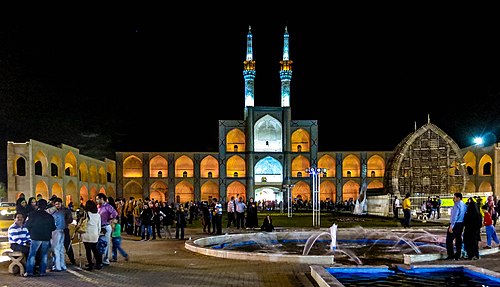
Yazd, located in central Iran, is one of the country's oldest cities, renowned for its unique architecture and rich cultural heritage. The city is situated in a desert region, making it an oasis of historical significance and beauty. With a history that dates back over 3,000 years, Yazd has served as a center for trade, culture, and Zoroastrianism, the ancient pre-Islamic religion of the region. Its strategic location along the Silk Road facilitated cultural exchange and economic prosperity, contributing to its vibrant history. The city is characterized by its distinct adobe buildings, narrow winding streets, and stunning windcatchers (badgirs) designed to cool the homes naturally. The historic city of Yazd is a UNESCO World Heritage site, recognized for its remarkable preservation of traditional Persian architecture.
Cultural diversity is a hallmark of Yazd, as the city has been a refuge for various communities over the centuries, including Zoroastrians, Jews, and Christians. Today, it remains one of the last bastions of Zoroastrian culture, with numerous fire temples and the Towers of Silence, where the deceased were historically laid to rest. The city hosts vibrant bazaars where artisans produce traditional crafts, textiles, and pottery, showcasing the rich artistic heritage of the region. Additionally, Yazd serves as an important center for Persian carpet weaving, with exquisite designs that reflect the local culture. The city's culinary offerings are equally noteworthy, featuring traditional dishes such as "shirini yazdi," a local pastry, and "zardak polow," a saffron-infused rice dish.
Yazd is also home to several notable historical sites, including the Jameh Mosque, known for its stunning tile work and towering minarets, and the Yazd Atash Behram, one of the oldest Zoroastrian fire temples in the world. The city’s landscape is framed by the surrounding mountains and the vast Dasht-e Kavir desert, offering outdoor activities such as desert trekking and stargazing. With a population of approximately 600,000, Yazd attracts numerous tourists eager to explore its ancient streets, learn about its unique heritage, and experience the warmth of its vibrant community. As a city that blends history with modernity, Yazd stands as a testament to the enduring cultural legacy of Iran.
Facts about Yazd
- Yazd is known as the 'City of Windcatchers' due to its unique architecture that features windcatchers (badgirs), which are traditional cooling towers designed to harness the wind for ventilation.
- The historic city of Yazd is recognized as a UNESCO World Heritage Site, highlighting its unique Persian architecture, especially its adobe buildings and ancient qanats (underground water channels).
- Yazd is one of the oldest continuously inhabited cities in the world, with a history that dates back over 3000 years, making it an important cultural and historical center in Iran.
- The city is the center of Zoroastrianism in Iran and is home to significant Zoroastrian sites, such as the Atash Behram Fire Temple, which houses one of the oldest fires in the Zoroastrian faith, burning since 470 AD.
- Yazd has its own distinctive dialect known as 'Yazdi Persian', which is different from standard Persian, reflecting the local culture and history of the region.
- The city is famous for its intricate tile work and beautiful mosques, particularly the Jameh Mosque of Yazd, which features stunning minarets and a spectacular entrance portal.
- Yazd is located in a desert region and has a unique climate with high temperatures and low rainfall, contributing to its traditional mud-brick architecture that keeps homes cool.
- Local cuisine in Yazd is renowned for its sweets, particularly 'baghlava' and 'pashmak,' as well as savory dishes like 'dizi' and 'biryani,' which reflect the city's culinary heritage.
- Yazd holds a unique annual event called 'Fasli', a celebration of the summer solstice that involves performances, music, and cultural activities, showcasing the city’s cultural richness.
- The city has a rich tradition of silk weaving and is known for its high-quality Yazdi silk, which has been a traditional craft of the region for centuries.