Yekaterinburg, Russian Federation
- 1,495,066 people
- 16 places to visit
- 56.8431, 60.6454
Places to Visit (16)
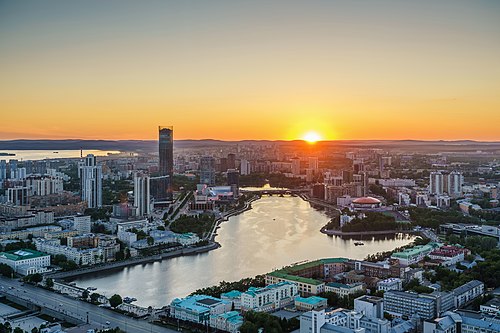
Yekaterinburg is a prominent city in the Ural region of Russia, serving as the administrative center of Sverdlovsk Oblast. Founded in 1723 by the Swedish engineer Vasily Tatishchev and named after the wife of Tsar Peter the Great, Yekaterinburg has evolved into one of the country's major cultural and industrial hubs. With a population exceeding 1.4 million residents, it ranks as one of Russia's largest cities and is recognized for its strategic significance, located at the border between Europe and Asia. The city's growth was significantly influenced by its rich deposits of minerals and metallurgical resources, allowing it to develop a diverse economy focused on manufacturing, engineering, and heavy industry.
Today, Yekaterinburg is a vibrant urban center known for its historical landmarks, modern architecture, and rich cultural scene. The city boasts several notable attractions, including the Church on the Blood, built on the site of the Romanov family's execution and reflecting a blend of Russian architectural styles. Yekaterinburg also has a thriving arts scene, with numerous theaters, museums, and galleries that showcase both traditional Russian culture and contemporary art. The Ural Federal University, one of Russia's leading educational institutions, is located here, attracting students from across the country and abroad. Additionally, Yekaterinburg is a key transportation hub, with well-developed rail, road, and air connections that facilitate trade and travel, reinforcing its role as a critical link between Europe and Asia.
The city has witnessed significant development and modernization since the dissolution of the Soviet Union, positioning itself as an important business and cultural center. Notably, Yekaterinburg hosted the 2018 FIFA World Cup matches, showcasing its capability to accommodate international events. Its diverse population reflects a variety of cultural influences, contributing to a cosmopolitan atmosphere where Eastern and Western traditions intersect. As Yekaterinburg continues to expand and innovate, it remains a city that embodies a blend of historical significance and contemporary dynamism, making it an essential part of Russia’s socio-economic landscape.
Facts about Yekaterinburg
- Yekaterinburg is the fourth-largest city in Russia and serves as the administrative center of the Ural Federal District.
- It is named after Catherine the Great, and its founding in 1723 was connected to the establishment of the Ural mining industry.
- Yekaterinburg is known for the Church on the Blood, built on the site of the execution of the last Russian Emperor, Nicholas II, and his family in 1918.
- The city is a cultural hub, hosting the Ural Opera Ballet and the Yekaterinburg Contemporary Art Museum, making it a center for the arts in the Ural region.
- Yekaterinburg is located on the border of Europe and Asia, making it a symbolic crossroads between the two continents.
- The city hosted the 2018 FIFA World Cup, including matches held at the Central Stadium, showcasing its development and infrastructure.
- Yekaterinburg is home to the world's first statue of Vladimir Lenin, which remains a significant symbol of the city’s Soviet past.
- It is known for its dynamic academic environment, with institutions such as the Ural Federal University, which plays a significant role in research and education.
- Yekaterinburg boasts a vibrant street culture, including numerous festivals, art exhibitions, and public art installations, distinguishing it from many other cities in Russia.
- The city played a crucial role in the construction of the Trans-Siberian Railway, contributing to its development as a major transport hub in the region.