Zahedan, Iran
- 551,980 people
- 5 places to visit
- 29.4893, 60.864
Places to Visit (5)
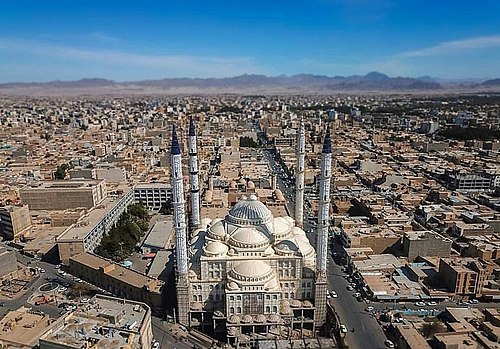
Zahedan is the capital of the Sistan and Baluchestan province in southeastern Iran, situated near the border with Pakistan and approximately 1,680 kilometers southeast of Tehran. Established as an important administrative center, the city has a strategic position that has facilitated trade and cultural exchanges across the region. The population of Zahedan is diverse, with a significant number of Baluch ethnic communities, as well as Persian, Kurdish, and other groups, contributing to the rich cultural tapestry of the city. As of the last census, Zahedan has a population of around 600,000 residents, and the city has grown significantly in the last few decades due to its expansion as a trade hub and central point for migrations from neighboring regions.
The economy of Zahedan is influenced by its location, with trade playing a vital role in its development. The city's markets are bustling with goods imported from Pakistan and beyond, including textiles, electronics, and food products. Agriculture also supports the local economy, with farmers cultivating crops suited to the arid climate of the region. Despite facing challenges such as limited access to water and economic underdevelopment compared to more central cities in Iran, Zahedan is experiencing gradual improvements in infrastructure, connectivity, and investment. The city is also a center for education, with several universities and vocational institutions serving the needs of the local population and attracting students from across the province.
Zahedan has significant historical and religious importance, being home to various cultural sites and landmarks. One notable site is the Makki Mosque, one of the largest mosques in Iran and a central place of worship for the Sunni Muslim community. The city's history dates back to ancient times, with references to it in various historical texts and accounts, contributing to its rich heritage. However, Zahedan has also faced challenges related to security and political unrest in recent decades, largely due to its proximity to conflicts in neighboring countries and issues related to drug trafficking. Nonetheless, Zahedan remains a culturally vibrant city, known for its traditional music, cuisine, and hospitality, representing a unique blend of ethnicities and traditions that serve as a testament to the region's storied past and its potential for future growth.
Facts about Zahedan
- Zahedan is the capital of Sistan and Baluchestan Province in southeastern Iran, making it a key administrative center in a predominantly tribal and ethnically diverse region.
- The city is located near the borders of Pakistan and Afghanistan, serving as a significant trade and transit hub for goods and people between these countries.
- Zahedan is known for its unique architectural blend of Persian, Islamic, and local Baluchi styles, which can be observed in its mosques, bazaars, and residential buildings.
- The city has a rich history tied to ancient trade routes, including the Silk Road, which passed through the broader Sistan region, influencing its cultural and economic development.
- Zahedan experiences a predominantly arid climate, characterized by hot summers and relatively mild winters, making it distinct from many other Iranian cities with different climatic conditions.
- The city was officially established in the 19th century and has grown significantly since then, transitioning from a small settlement to a bustling urban center.
- Zahedan is home to the largest Baluchi population in Iran, contributing to its unique cultural fabric, including traditional music, clothing, and cuisine.
- The city hosts the Great Mosque of Zahedan, one of the largest mosques in the region, renowned for its stunning architecture and religious significance.
- Zahedan has been a focal point for development efforts in education and infrastructure in recent years, supported by both the Iranian government and local NGOs.
- Despite facing challenges such as economic hardship and political unrest, Zahedan is characterized by its resilient community and rich cultural heritage, making it a unique place within Iran.