Zinder, Niger
- 318,874 people
- 1 places to visit
- 13.8018, 8.9853
Places to Visit (1)
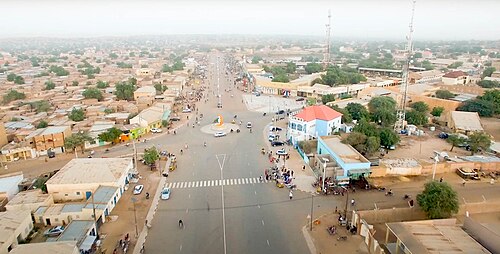
Zinder is the second-largest city in Niger and serves as the capital of the Zinder Region, located in the southeastern part of the country. Historically significant, it lies along traditional trade routes connecting the Sahara Desert to the west and the Lake Chad region to the east. Zinder's population, which is predominantly Hausa, is estimated to exceed 200,000 residents. The city is known for its rich cultural heritage, which is evident in its architecture, languages, and customs. Among its notable landmarks is the Sultan's Palace, a historic site that reflects the city's role as a former political and commercial hub.
Economically, Zinder plays an important role within Niger, primarily through agriculture and trade. The surrounding fertile land allows for the cultivation of crops such as millet, sorghum, and cowpeas, while livestock farming is also prominent. Markets in Zinder frequently feature local produce and crafts, contributing to the vibrant local economy. In addition to agriculture, commerce is bolstered by the city’s position as a trade center, facilitating the exchange of goods among various ethnic groups and regions. Despite facing challenges such as access to education and health services, Zinder is experiencing gradual development, with ongoing investments in infrastructure and social services aimed at improving the quality of life for its residents. Overall, Zinder embodies a blend of historical significance and contemporary development, making it a pivotal city in Niger's socio-economic landscape.
Facts about Zinder
- Zinder is the second-largest city in Niger, known for its vibrant markets and cultural diversity.
- The city served as a historical crossroads of trade routes, connecting West Africa to North Africa.
- Zinder is home to the famous Sultan's Palace, a significant historical landmark showcasing the Zinder region's traditional architecture.
- The city hosts the annual 'Festival of the People' (Festival de la Culture), celebrating local music, arts, and cultural heritage.
- Zinder has a rich history as a former capital of the Sultanate of Damagaram, which played a vital role in the region's sovereignty and trade.
- The Zinder region is known for its unique Hausa cultural influences, distinct music, and traditional crafts.
- The city is located near the picturesque W est Niger River, providing a vital waterway for agriculture and transportation.
- Zinder serves as an educational hub with several institutions, including the University of Zinder, promoting higher education in the region.
- The city was the site of significant events during the colonial period, especially in relation to French colonization in the early 20th century.
- Zinder is known for its significant livestock markets, particularly for cattle, which play a crucial role in the local economy.