Zittau, Germany
- 25,785 people
- 9 places to visit
- 50.9, 14.803
Places to Visit (9)
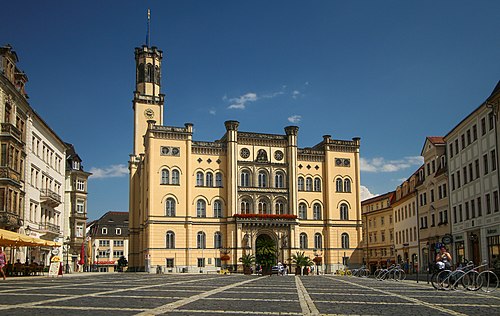
Zittau is a small city located in the southeastern part of Germany, within the state of Saxony. Situated near the borders of Poland and the Czech Republic, Zittau lies at the confluence of the Zittau River and the Lusatian Neisse River, making it a significant regional hub. The city's origins date back to the 13th century, and it received city rights in 1301. Historically, Zittau was a prosperous center for trade due to its strategic position along the trade routes connecting Central Europe. Over the centuries, it has witnessed numerous political and economic changes, including its role in the medieval cloth trade and its incorporation into various territorial jurisdictions.
Architecturally, Zittau is noted for its well-preserved historical buildings that reflect a mix of Gothic, Renaissance, and Baroque styles, including the St. John's Church and the St. Mary's Church. One of its unique features is the Zittau Passion Play, a theatrical tradition that dates back to the 16th century, which is recognized as one of the oldest still-performed passion plays in Europe. In addition to its cultural heritage, Zittau serves as a gateway to the Lusatian Mountains, attracting visitors seeking outdoor activities such as hiking and skiing. The city's rich history, artistic heritage, and surrounding natural beauty contribute to its appeal as a destination for both tourists and residents, making Zittau a notable part of Germany's cultural landscape.
Facts about Zittau
- Zittau is known for its unique geographic location at the tripoint of Germany, Poland, and the Czech Republic, which is marked by a tri-border stone.
- The city is home to the Zittau Mountains, a picturesque range offering diverse hiking and cycling opportunities, attracting outdoor enthusiasts.
- Zittau boasts the historic Zittau Theatre, established in 1821, which is one of the oldest municipal theaters in Germany still in operation.
- One of the city‘s most notable architectural landmarks is the Zittau Town Hall, a stunning example of late Gothic style, completed in the early 16th century.
- Zittau played an important role during the Protestant Reformation and is home to several significant Reformation-era artifacts and sites.
- The Stadtmuseum Zittau showcases the city’s rich history with extensive exhibits on textiles, ceramics, and local crafts dating back to the medieval period.
- Zittau is famous for its unique 3D Theater, which offers a unique immersive experience showcasing short films in full three-dimensional format.
- Every September, Zittau hosts the Zittauer Stadtfest, a vibrant festival celebrating local culture with music, food, and artisan markets.
- The city has preserved parts of its medieval town wall, providing a glimpse into its history and defense against invasions during the Middle Ages.
- Zittau is renowned for its textile industry, particularly the production of Zittau lace and traditional wooden toys, which have historical significance.