Żory, Poland
- 63,174 people
- 16 places to visit
- 50.0447, 18.7006
Places to Visit (16)
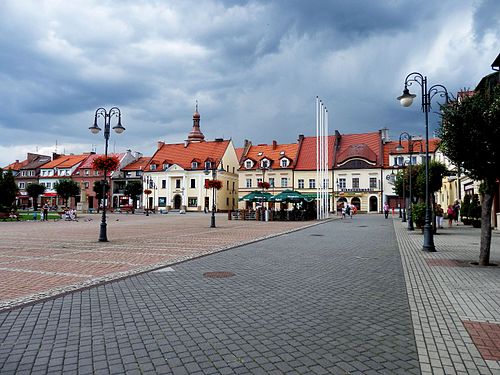
Żory is a city located in southern Poland, within the Silesian Voivodeship. It lies on the western edge of the Silesian industrial region, approximately 30 kilometers southwest of Katowice, the regional capital. Żory is situated at the confluence of the Żory and Kłodnica rivers, contributing to its picturesque setting. The city has a rich history that dates back to the early Middle Ages, with its first recorded mention in historical documents in 1228. Initially, Żory was a small settlement, but it gradually grew due to its strategic location along trade routes.
Throughout the centuries, Żory underwent significant transformations, particularly during the industrial revolution. The discovery of coal deposits in the nearby Silesian Basin spurred rapid economic growth and urbanization in the 19th century. The city's economy became predominantly industrial, focusing on coal mining, textiles, and later, electrical engineering, which has shaped its socioeconomic landscape. Today, while the industrial sector remains an essential aspect of Żory's economy, the city is also modernizing and diversifying its industries and services.
Žory is known for its well-preserved historical architecture and green spaces, making it an attractive place for both residents and visitors. The city boasts several notable landmarks, including the Church of St. Mary Magdalene, a Gothic structure that showcases the city's rich heritage. Parks and recreational areas are abundant, offering opportunities for outdoor activities. Additionally, Żory hosts cultural events and activities that celebrate its history and community, fostering a sense of local pride. As a result, Żory serves not only as a center of industry but also as a vibrant community that balances tradition and modernity.
Facts about Żory
- Żory is one of the few cities in Poland that has a unique system of underground water canals, known as 'rynny', which were historically used for transporting goods.
- The city is renowned for its rich history related to the coal mining industry, which significantly contributed to its development during the 19th and 20th centuries.
- Żory hosts the largest 'Saint Dominic's Fair' in Silesia, celebrated for over 700 years, attracting visitors with various stalls and local products.
- The city features the only known preserved wooden church in the entire Silesian region, which was built in the 16th century and is a prime example of traditional architecture.
- Żory's 'Dąbrowski Park' is an extensive urban park that is considered one of the largest green spaces in the area, providing recreational activities for residents.
- The city played a pivotal role in the development of regional railways, with the first railway line connecting Żory to other parts of Upper Silesia opened in 1846.
- Żory is home to the 'Kopalnia Soli', an underground salt mine that dates back to the Middle Ages, showcasing the region's mining heritage.
- The city is recognized for its unique blend of modern art and historical architecture, including contemporary installations set against traditional Silesian buildings.
- Żory hosts an annual multicultural festival that celebrates the diverse heritage of its residents, including Polish, Silesian, and other cultural influences.
- The town has a significant network of cycling paths, making it one of the most bicycle-friendly cities in Poland, promoting eco-friendly transport among its citizens.